The Secretary System
A redesign that uncovered the hidden backbone of healthcare operations — the secretaries managing every appointment behind the scenes. This case study explores how Monshi Yar transformed scattered, manual workflows into a unified, rewarding, and reliable digital system. By blending behavioral design, field research, and incentives, the app turned an overlooked workforce into active partners in delivering a smoother, more trustworthy patient journey.
Context — Where Human Process Broke the Digital Promise
The clinic network had modernized its public face. Patients could now book appointments online through the Darmankadeh website.
But behind the scenes, the system still ran on manual labor.
Each booking triggered an SMS sent from the clinic’s support team to the doctor’s office secretary — who was expected to record the appointment manually. If the SMS didn’t arrive, or the secretary forgot to log it, the patient would show up at a closed office or unlisted slot.
The result was predictable: angry patients, confused doctors, overwhelmed support teams, and a damaged brand.
While others were improving patient interfaces, we discovered the real bottleneck lived somewhere else — the secretaries’ desks.
They were the invisible operators of the healthcare cycle, and the system had never truly been designed for them.
Our mission became clear:
Design a tool that would make secretaries part of the solution — not the weakest link.
Understanding the Challenge — A Missing Persona
The system had three visible actors: patients, doctors, and the clinic. But our research revealed a fourth: the secretary— the operational heart of the process.
From field observations and support team data, I noticed a striking pattern:
Over 40 % of all support calls were not from patients or doctors, but about secretary coordination.
Many appointments failed simply because secretaries forgot to check SMS messages or didn’t notify the clinic about office closures.
Yet, these secretaries were not careless — they were overloaded, underpaid, and disconnected from the digital side of the business.
For patients, this caused mistrust.
For the clinic, it hurt branding and operations.
And for the doctors, it created scheduling chaos.
To fix the experience, we had to design for the people who were never in the design room.
Research & Insights — Understanding the Real Environment
I approached the problem as an ethnographer first, not a designer.
Field studies:
I personally visited 10 doctor offices to observe workflows and space constraints. This helped me understand how secretaries managed appointments, interacted with doctors, and handled daily chaos between phone calls, paper notebooks, and patients waiting in line.
Focus group #1 — Support team:
We held a workshop with the clinic’s support team to identify recurring pain points. They revealed that a large part of their day was spent resolving miscommunication between secretaries and patients.
Focus group #2 — Secretaries themselves:
Five secretaries were invited for candid interviews — three cooperative and two uncooperative.
We learned about their routines, incentives, and frustrations:
- Age range mostly 35–50, with limited digital literacy.
- Time-poor, multitasking between patient intake, payments, and calls.
- Felt underappreciated — no rewards for doing their job better.
Key Insight
Their disengagement wasn’t due to laziness; it was a system design failure.
They lacked both time and incentive to care about digital coordination.
If we could save them time and reward them for participation, cooperation would follow naturally.
Design Strategy — Empathy Meets Motivation
The breakthrough idea was simple but transformative:
Create a dedicated app for secretaries that combined utility with motivation.
We called it Menshi Yar — literally “Secretary’s Assistant.”
Our design goal was twofold:
- Make digital coordination effortless.
Deliver patient information directly, confirm receipt, and automate communication loops. - Make participation rewarding.
Introduce gamification and monetary incentives that gave secretaries a reason to engage daily.
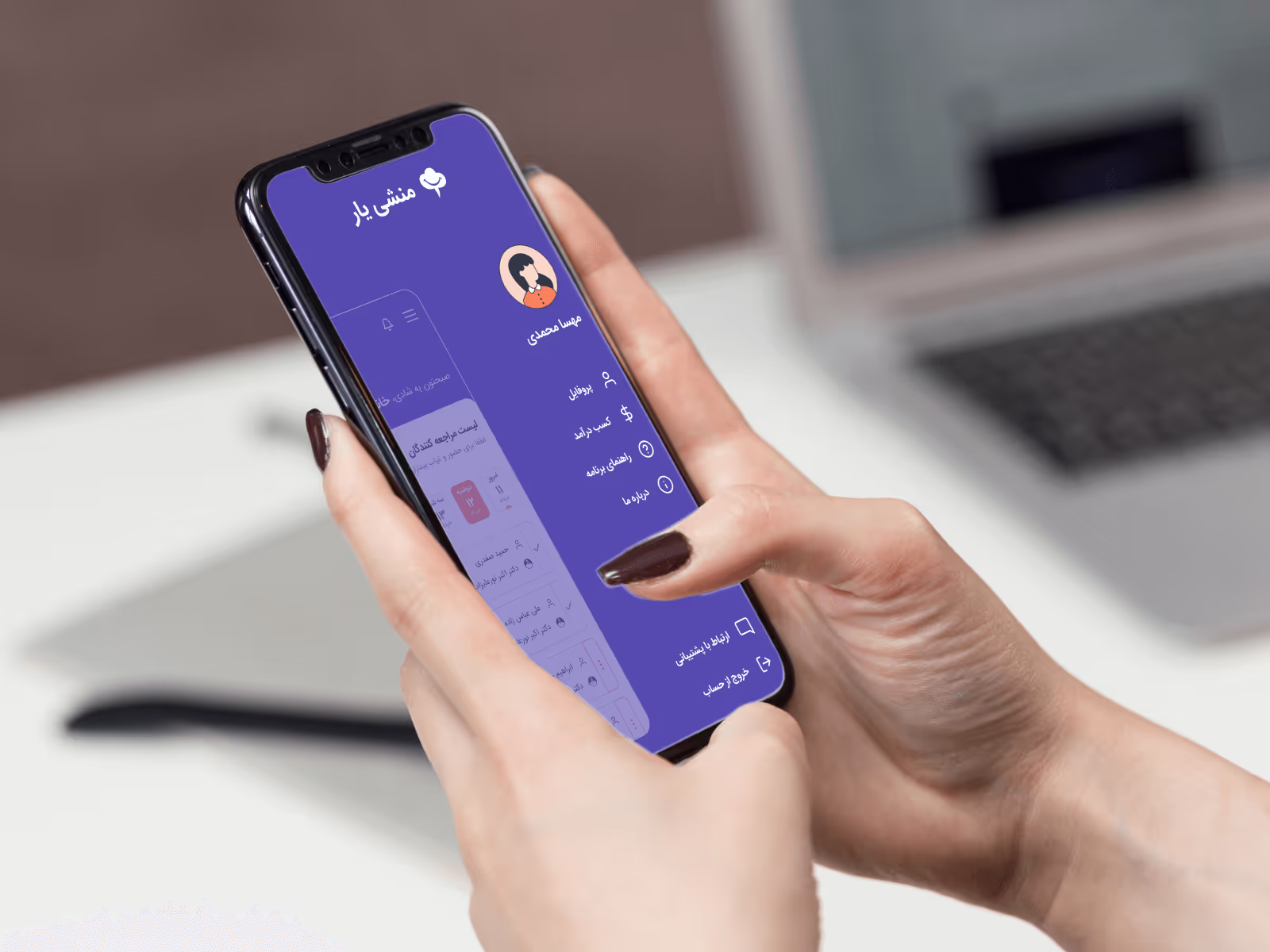
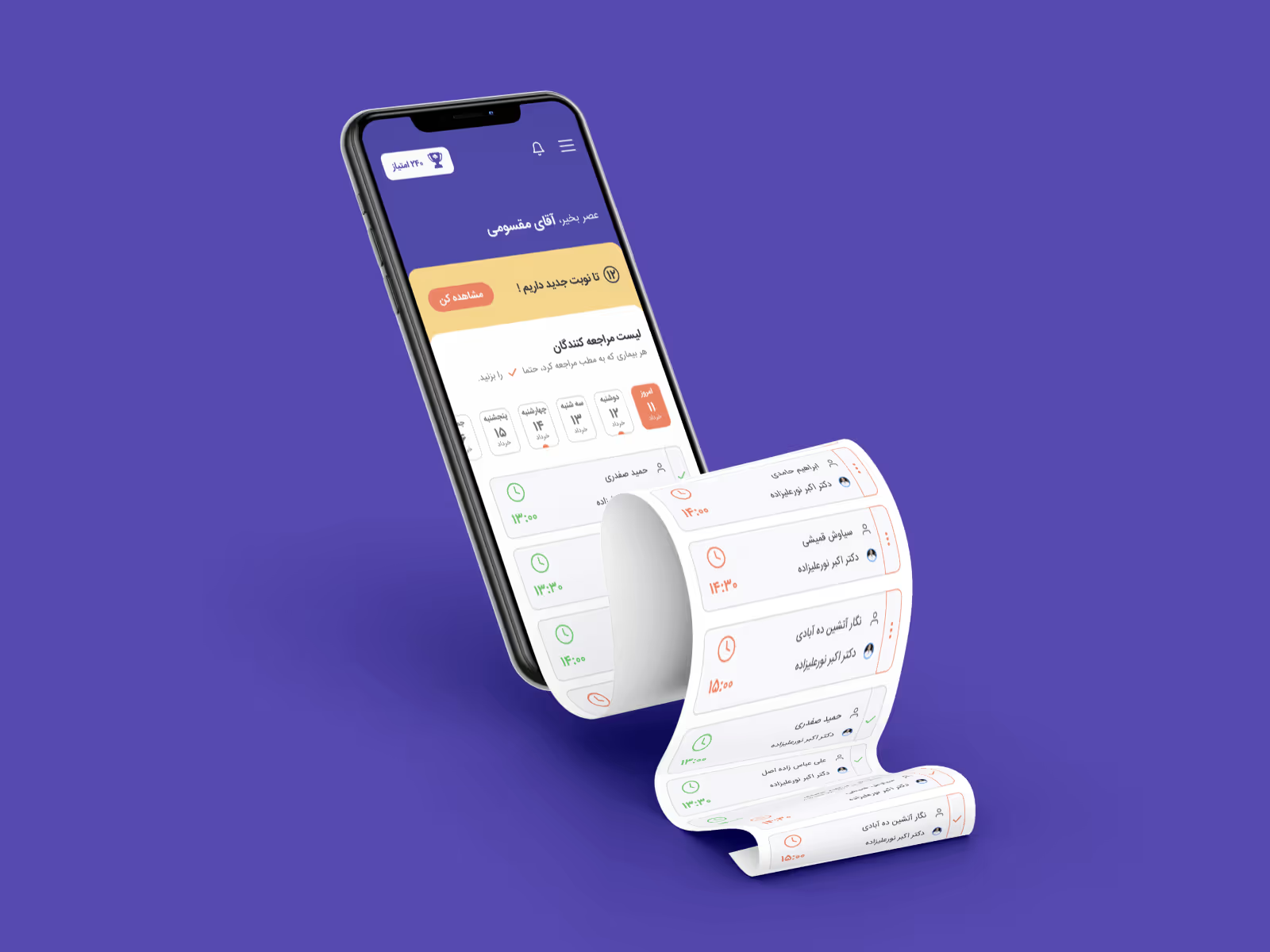
Designing the Secretary Experience
Core Interaction: Confirming Appointments
Each time a patient booked an appointment online:
- A notification was instantly sent to the corresponding office via the Menshi Yar app.
- The secretary had to open and confirm the patient details before accessing other parts of the app — ensuring data was actually recorded.
This one small interaction solved the biggest operational leak: unacknowledged appointments.
Gamification & Rewards: The Secretaries Club
To make engagement habitual, we added a point-based club system where every meaningful interaction — confirming visits, updating schedules, closing office days — earned points redeemable for cash bonuses.
Each month, the best-performing secretary received a gold coin and public recognition at internal events — turning an administrative task into a healthy competition.
Even secretaries skeptical of technology became active users once they realized they could earn real money from consistent participation.
Design System & Simplicity
Given the target age group and varied technical literacy, the UI was kept extremely minimal — large typography, clean colors, and one-task-per-screen logic.
Every element was tested against a single question: “Can it be understood without explanation?”
Testing & Iteration
Before full development, we created an interactive prototype in Adobe XD.
Five secretaries from the research phase participated in testing sessions, incentivized with small gifts.
The results were remarkable:
- All participants completed their main tasks without confusion.
- Every single one asked, “When will this app be available?”
- The most common question wasn’t about usability — it was “How can I earn more points?”
That told us the emotional hook was working.
Results — Turning Secretaries Into Advocates
Within the first months of launch:
- 150 secretaries (out of ~500) installed and actively used the app.
- Support calls dropped sharply, as appointment confirmations became automatic.
- Data accuracy improved, reducing the need to send staff physically to offices.
- Clinic branding strengthened as patient satisfaction rose — no more “I arrived and the office was closed” moments.
- Secretaries began referring friends to join, turning into unexpected brand ambassadors.
“Now I tell patients to book through the website — it’s easier for me too,”
said one of our early test secretaries.
The app’s Secretaries Club became so popular that it outperformed every previous incentive campaign. What began as a risky experiment ended up becoming a benchmark among competitors in medical appointment management.
Reflection — Designing for the Invisible Users
This project taught me one of the most valuable lessons in product design:
Sometimes, the most critical users are the ones nobody talks about.
By stepping beyond patients and doctors, we discovered an entire layer of human infrastructure that was shaping the healthcare experience every day.
Menshi Yar wasn’t just an app — it was a behavioral shift.
It modernized outdated processes, motivated overlooked employees, and proved that empathy can be a powerful business strategy.
Months later, secretaries still used the app daily — not because they were told to, but because it made their jobs better.
That’s when I realized: true design success in healthcare isn’t only when patients feel cared for — it’s when the people who care for them finally do too.